We spend an extraordinary amount of our lives constructing things that cannot last.
Identity. Reputation. Career. Relationships. Belief systems. The stories we tell about ourselves. We assemble them slowly enough that eventually we stop recognizing them as constructions. They simply become who we are.
But what happens when the architecture fails?
I have become increasingly interested in collapse—not simply as catastrophe, but as a psychological and creative event. There is a peculiar moment in which an old structure has stopped working and whatever will replace it has not yet emerged. It is an uncomfortable territory because it offers neither the security of what was nor the certainty of what comes next.
We tend to treat this condition as something to escape as quickly as possible. We want resolution. Diagnosis. Explanation. Reconstruction.
But perhaps we move too quickly.
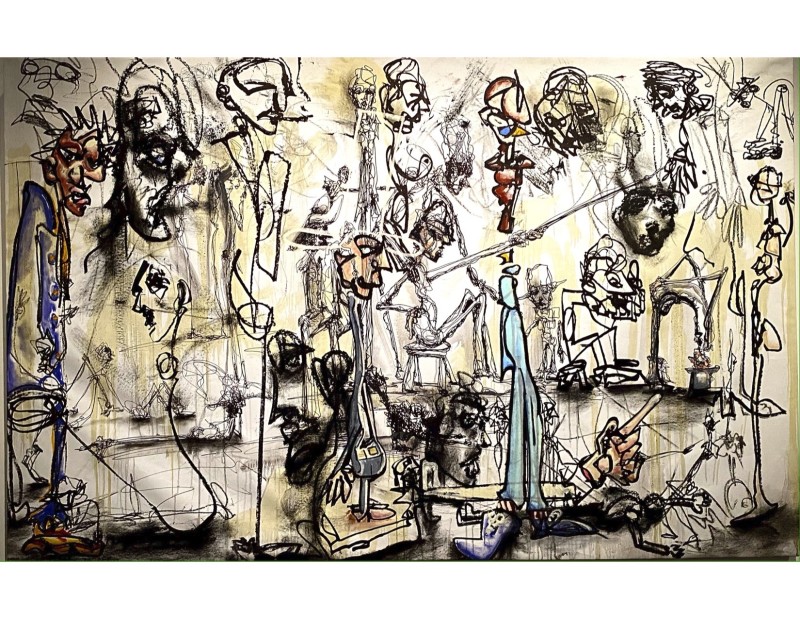
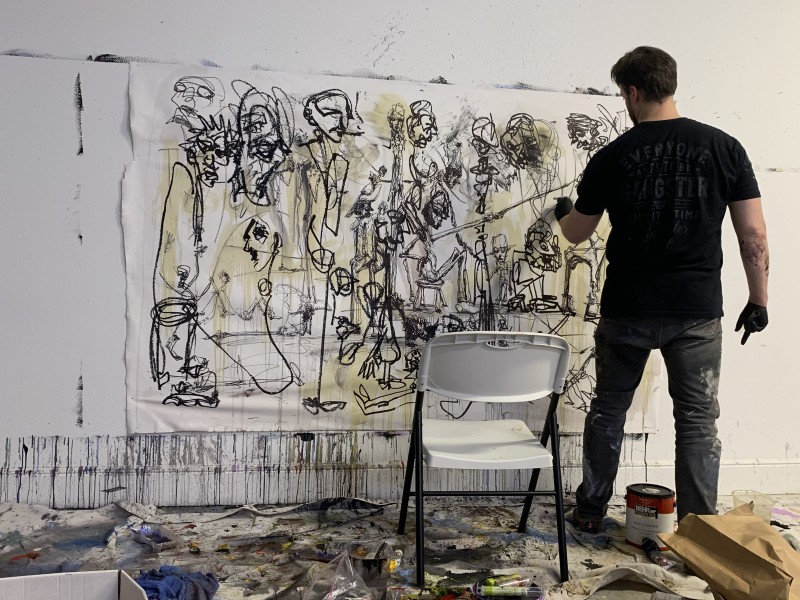
In painting, destruction can be generative. I can construct a face and then obscure it, scrape through it, draw over it, contradict it, bury one image beneath another. At some point the painting develops a history. What was removed remains present as evidence. An accidental mark forces a decision that could never have been planned.
The painting becomes more interesting precisely because it has lost the ability to return to its original state.
I wonder if something similar happens to people.
We commonly imagine transformation as addition: becoming wiser, stronger, more accomplished, more certain. But some transformations occur through subtraction. The identity that once organized a life becomes inadequate. Certainties disappear. Familiar categories fail. Something has to be relinquished before something else can emerge.
This is what I mean by an architecture of collapse.
Architecture implies structure—something designed to hold weight. Collapse reveals which parts were actually carrying it.
That distinction interests me.
It also raises a more unsettling possibility: perhaps the self is not the architecture at all.
Perhaps identity is provisional—a succession of structures erected around something considerably more difficult to name. We mistake the structure for the inhabitant because, under ordinary circumstances, there is little reason to distinguish between them.
Until the walls come down.
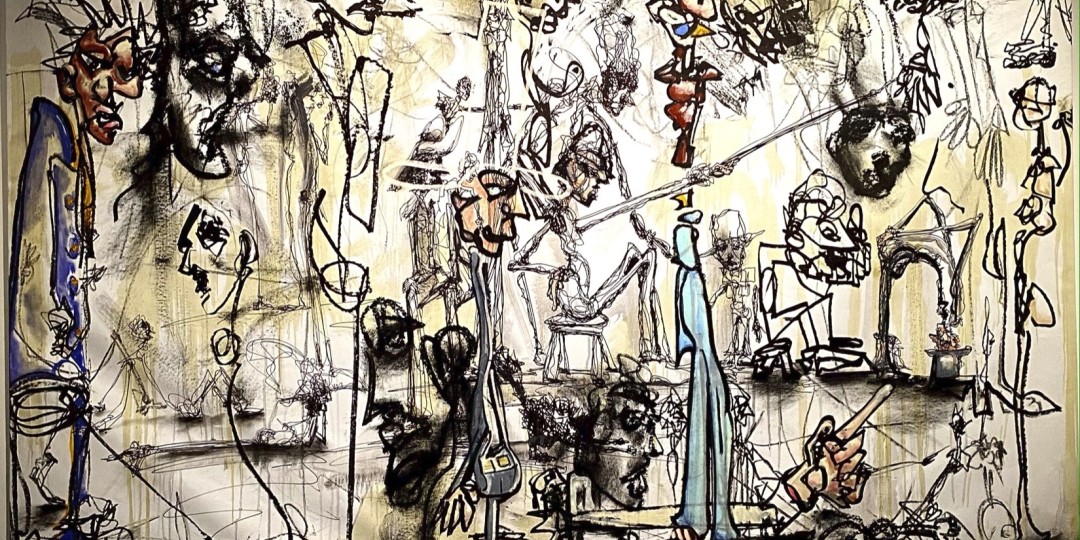
My recent paintings increasingly occupy this territory. Figures emerge from disorder without entirely escaping it. Faces are assembled and disassembled simultaneously. Beauty competes with distortion. Control remains visible alongside accident.
I don’t want the paintings to resolve these contradictions.
Resolution may be precisely what prevents us from seeing them.
There is a temptation, whenever something collapses, to ask how quickly it can be rebuilt. Increasingly, I find myself interested in a different question:
Before we rebuild, is there anything the ruin is trying to show us?