It’s ridiculous to think that we are ever going to get ourselves completely figured out in this lifetime.
I spent a good portion of my life believing otherwise.
There was always some imaginary version of me waiting somewhere ahead—the man who had finally reconciled all the contradictions, understood his motives, made peace with his past, conquered his appetites, settled his questions about God, and arranged the furniture of his interior life into something presentable.
I don’t believe in that man anymore.
The older I get, the more suspicious I become of resolution.
Dostoevsky understood this. So did Kierkegaard. The human being is not a problem awaiting the correct answer. We are creatures capable of believing two contradictory things before breakfast and defending both of them passionately by dinner. We want intimacy and solitude. Recognition and invisibility. Freedom and someone to tell us what to do. We want to be forgiven while secretly believing there are things that should never be forgiven.
Psychology gives names to some of this. Philosophy gives us arguments about it. Religion gives us stories, rituals, confession, grace. Literature may come closest because literature doesn’t always insist on curing the contradiction. Sometimes it simply sits beside it.
Painting can do that too.
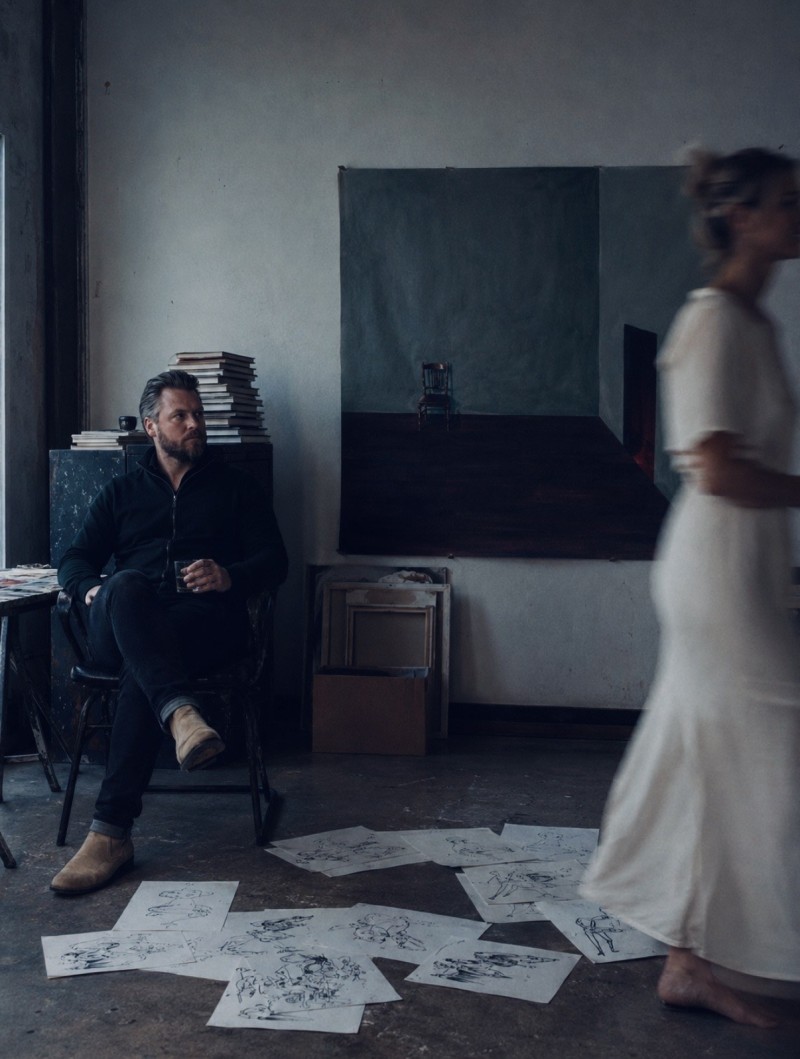
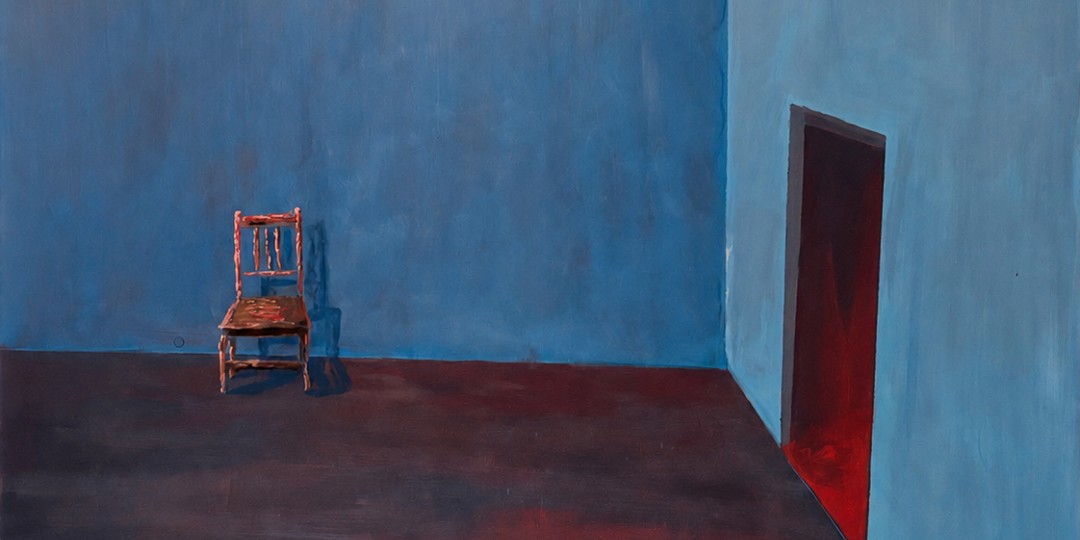
Maybe that is why my paintings have become emptier.
I used to think an artist was supposed to keep adding until the painting contained enough. More marks. More symbolism. More evidence of labor. More explanation.
Lately I find myself wanting to remove things.
A chair.
A bed.
A piece of paper.
An enormous room with almost nothing happening inside it.
There is something frightening about an empty room because there is nowhere for the eye to hide. And there is something frightening about silence for the same reason.
For years I was much more comfortable with noise—with achievement, performance, ideas, conversation, crowds, intensity, being seen. Silence can feel suspiciously like disappearance.
But perhaps disappearance and presence are not opposites.
Brother Lawrence found God washing dishes. Kierkegaard wrote about the individual standing alone before God. The great contemplative traditions keep returning to the same uncomfortable possibility: perhaps the most important parts of a life occur without an audience.
That is difficult for me.
I like the audience.
I like making something and putting it on a wall and watching someone stop in front of it. I like applause. I like conversation. I like being understood. There is no virtue in pretending otherwise.
But I am beginning to wonder whether maturity has less to do with eliminating those desires than with no longer requiring them to prove that I exist.
Maybe a painting can simply be a chair in a room.
Maybe a piece of paper can remain blank.
Maybe every silence doesn’t need to be filled.
And maybe the past doesn’t need to be transformed into a beautiful explanation before we are permitted to continue living.
We carry strange things forward with us—memories, shame, tenderness, people we can no longer reach, versions of ourselves we barely recognize, dreams that seem absurd in daylight but somehow know exactly where the wound is.
Some of them never resolve.
They simply become part of the architecture.
And perhaps that is what I am painting now.
Not answers.
Rooms in which the unanswered things are allowed to remain.
It’s ridiculous to think that one day I will finally understand myself and then begin living.
This is the living.